• Skip to primary navigation
  • Skip to main content

Garden Vision Epimediums

choice perennials for the shade garden

  • Home
    • Welcome to GVE
    • About Epimediums
    • About GVE
  • Catalogue
    • 2023 Web Catalogue
    • 2019 Print Catalogue
    • 2019 Print catalogue photos
  • Find Plants
    • By species
      • Epimedium Hybrids
        • E. × cantabrigiense
        • E. × omeiense
        • E. × perralchicum
        • E. × rubrum
        • E. × sasakii
        • E. × setosum
        • E. × versicolor
        • E. × warleyense
        • E. × youngianum
        • Other Epimedium hybrids
      • E. alpinum
      • E. brevicornu
      • E. diphyllum
      • E. fargesii
      • E. grandiflorum
      • E. grandiflorum f. flavescens
      • E. koreanum
      • E. leptorrhizum
      • E. lishihchenii
      • E. macrosepalum
      • E. myrianthum
      • E. perralderianum
      • E. pauciflorum
      • E. pinnatum ssp.
      • E. platypetalum
      • E. pubigerum
      • E. sempervirens
      • E. sp. nov.
      • E. stellulatum
      • E. sutchuenense
      • E. trifoliatobinatum
      • E. wushanense
      • E. zhushanense
      • Other Shade Perennials
    • By growth & habit
      • Clump-forming
      • Spreading
      • Particularly Drought-Tolerant
      • Evergreen
      • semi-evergreen
      • Deciduous
      • Dwarf form
      • Giant form
      • Heat-tolerant
      • Cold-tolerant
      • Early bloomer
      • late bloomer
    • By flower & foliage color
      • lavender/purple flowers
      • Orange flowers
      • Pink flowers
      • Red flowers
      • White flowers
      • Yellow flowers
      • Spring foliage color
      • Fall foliage color
  • Sources
  • Articles/Plant Blogs
  • Contact

giant form

Epimedium grandiflorum f . flavescens #6

Epimedium grandiflorum f. flavescens #6 

Cc. 950188
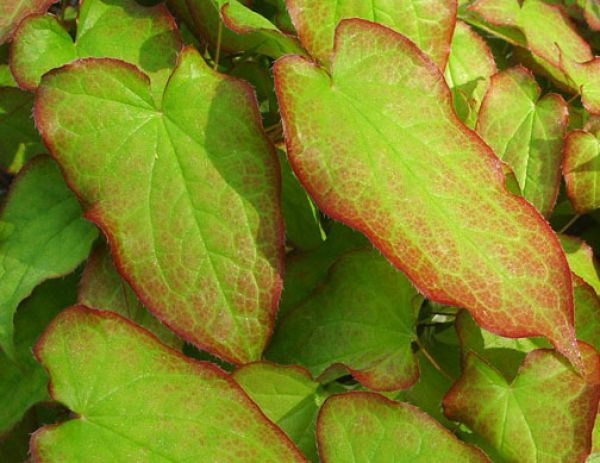
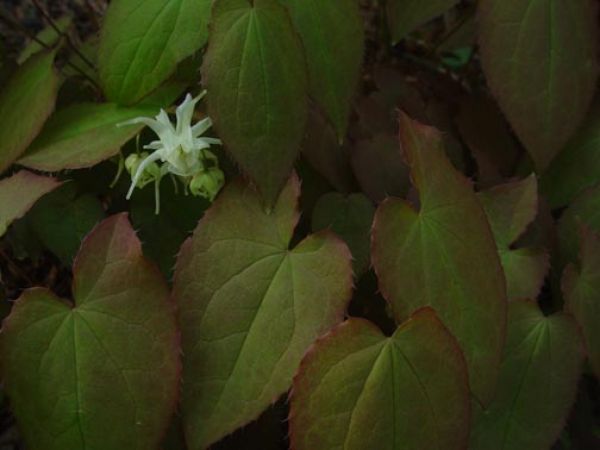
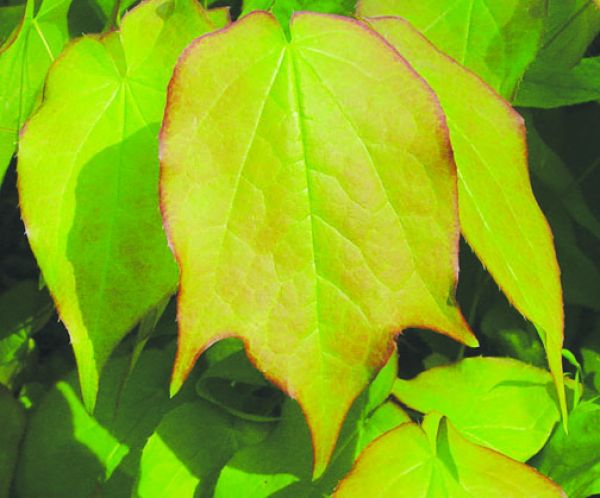
Distinctive for the exaggerated extra points on each terminal leaflet. In spring, the large leaflets have a thin dark bronze edging with an overall light bronze blush. The smooth leaf surface and very delicate spring coloration creates a soft effect.  Sizeable clusters of large, showy, pale yellow flowers are borne on long sprays beneath the leaves as they unfurl. 16” in bloom, to 20” tall.  Spreads 2-4" per year.
Iris tectorum ‘Slippery Slope’

Iris tectorum ‘Slippery Slope’  

***2010 Cobblewood Introduction***


Darrell has failed endless times growing the Japanese roof iris in our climate. The flower buds die over winter, starting a rot that eventually kills the plant. He collected this much hardier clone at a high elevation in the Dabashan region of southern Shaanxi Province, China. Here they were pulled up and over the icy mountain by a coal truck in Nov. 2000, hence the cultivar name.

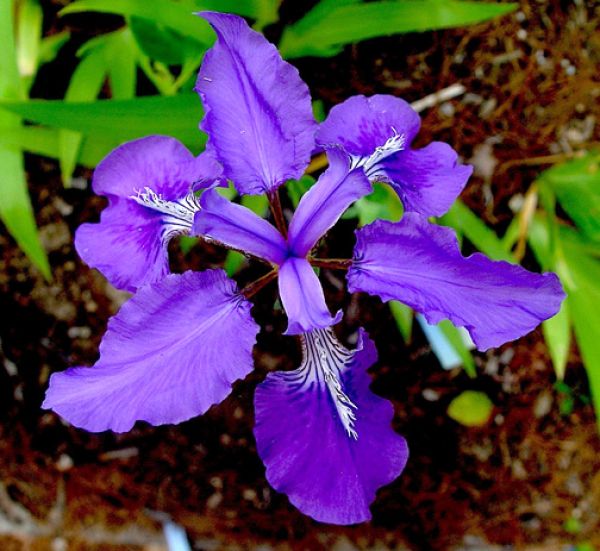
This clone thrives in half sun on an exposed stony ridge in my garden.  Best with sharp drainage in light shade/part sun. Large 4” violet blossoms emerge in late spring from 2’ × 2’ bright green foliage fans, giving a tropical appearance to an otherwise New England perennial garden. Spreads slowly, 2-5". per year, by fleshy rhizomes to form a massive clump over time, so give it some elbow room!  Needs division every 3-4 years for maximum vigor.

Epimedium grandiflorum ‘French Braid’

E. grandiflorum ‘French Braid’  (Cc. 960042)   

***2007 Cobblewood Introduction***


This eye-catching, vigorous, bold-foliaged seedling from Harold Epstein’s garden stands out from the pack with its bright, almost tropical spring leaf coloration. A psychedelic shade of orange flushes the edge of the leaflets that are dissected by luminous chartreuse veins flowing into an all green center. Large, elongated, overlapping leaflets tumble downward in a zig-zag pattern. Large creamy white flowers are borne underneath the expanding leaflets. 14” in bloom.

Epimedium grandiflorum forma flavescens “Aomori Forms”

E. g. f. flavescens “Aomori Forms” (Several clones/Cc. #) 

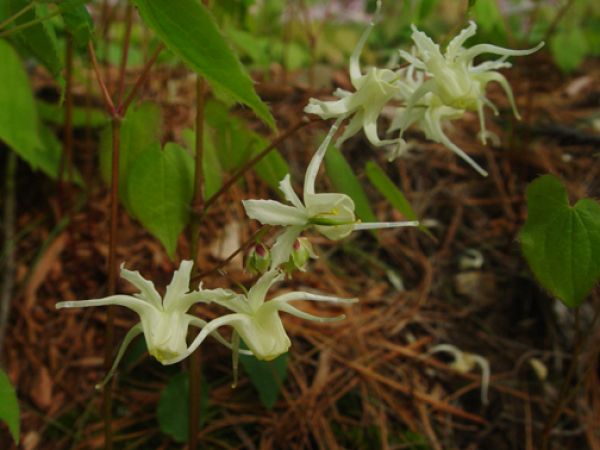
Prof. Stearn’s 1938 Epimedium monograph mentions “Faurie’s robust specimens from Aomori in Honshu, Japan”. Darrell explored the region in 1997. After several inquiries, their host led them to a steep hillside of densely planted Cryptomeria japonica, beneath which grew knee-high Epimediums with leaflets the size of your hand! Spring leaflets often flushed bronze-purple on 15-24” stems. Large, light yel­low flowers open beneath the unfurling leaves. Rhizomes spread 2-4” a year, creating massive clumps over time.   

Epimedium ‘Hot Lips’

Epimedium ‘Hot Lips’  (Cc. 031434)     

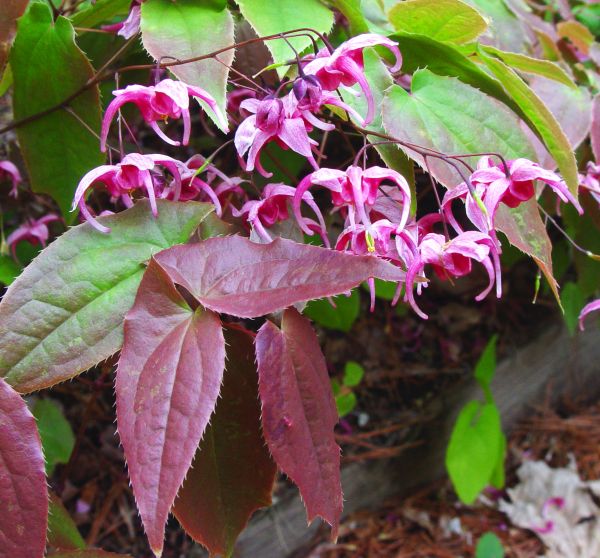
An E. acuminatum hybrid from Diana Reeck of the former Collector's Nursery, with multi-toned flowers of hot pink with the long spurred petals that are decidedly hotter than the broad sepals. Flower stems are tinged burgundy red. Long narrow foliage emerges a reddish pink. Given a bit of bright shade or moderate sun in the north, the plant can reach 20” high. Its bright blooms and bold semi-evergreen foliage draws your eye from quite a distance.   

Epimedium grandiflorum f. flavescens #5

E. grandiflorum  f. flavescens #5  (Cc. 970232)  

Reminiscent of E. koreanum ‘Harold Epstein’, with large soft yellow flowers and huge rounded leaflets, nearly as broad as long. However, its spreading rhizomes only grow 2-6” per year, forming a much thicker mass in the gar­den. Large, light yellow flowers held below the emerging foliage. 20” tall.  Rusty red fall color. 
Next Page »

Copyright © 2026 · Garden Vision Epimediums